



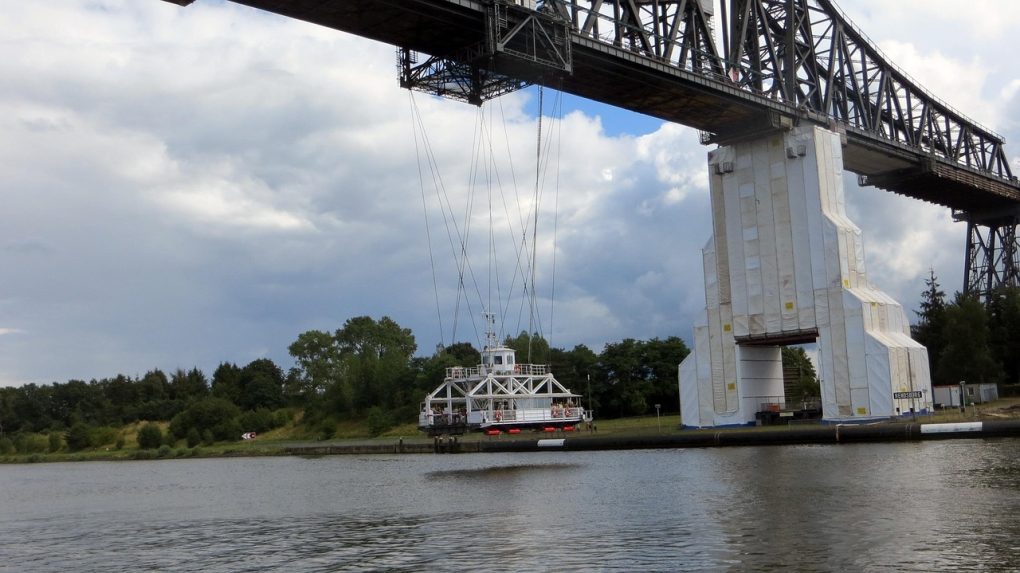
Located in Rochefort, Charente-Maritime, the Rochefort transporter bridge is the last transporter bridge still in operation in France. Designed by the engineer Ferdinand Arnodin and inaugurated in 1900, It was used to cross the Charente without hindering river navigation. Classified historical monument in 1976, this masterpiece of engineering now attracts thousands of visitors every year. In this article, discover the fascinating history of this unique bridge, how it works and practical information to help you organise your visit. Make the most of your stay at our campsite Saint Georges de Didonne to explore this emblematic site of the region.
History and construction of the transporter bridge
Historical background and the need for a bridge
At the end of the XIXᵉ century, crossing the Charente at Rochefort represented a real challenge. The river, over 150 metres wide at this point, was an essential passage for the transport of goods and local traffic. Traditional solutions such as fixed bridges or ferries were unsuitable: bridges would have impeded the passage of French Navy ships to Rochefort arsenal, while ferries were slow and subject to the vagaries of the weather. What was needed was an innovative solution that would allow pedestrians and vehicles to pass through while maintaining river navigation.
Designed by Ferdinand Arnodin
It was engineer Ferdinand Arnodin who took up the challenge. A specialist in suspension bridges and metal structures, he designed a transporter bridge, a technical innovation inspired by existing models in Spain and the UK. How does it work? A gondola suspended by a system of cables and pulleys, capable of transporting passengers and vehicles from one bank to the other, without hindering navigation.
The steel structure rests on two pylons anchored in concrete foundations, providing rock-solid stability against the currents of the Charente.
Inauguration and first years of operation
Le Rochefort transporter bridge was inaugurated on 29 July 1900 after three years' work. It quickly became a key element in the local transport network. The gondola allowed regular passage of pedestrians, horse-drawn carriages and even the first cars. The fast, efficient crossing made life easier for the people of Rochefort and the surrounding area, while maintaining maritime activity.
Operation and technical specifications
Principle of a transporter bridge
The transporter bridge is based on a fixed metal structure on which a suspended gondola travels. The gondola is attached to a carriage running along the bridge deck, driven by cables and a counterweight system. This solution makes it possible to cross a stretch of water without installing intermediate piers or a fixed deck, thus guaranteeing the passage of ships under the bridge.
This type of bridge was particularly well suited to port areas where sea traffic had to remain fluid. The crossing time is around 3 minutes, providing a fast and efficient service.
Specific characteristics of the Rochefort bridge
Le Rochefort transporter bridge is distinguished by :
- Height of pylons: 66.25 metres (the highest in France).
- Length of deck: 175.5 metres.
- Total weight: around 600 tonnes of steel.
- Gondola capacity: up to 200 passengers or 9 vehicles.
The metal structure is regularly maintained to ensure its safety and longevity, while respecting the original materials and techniques.
Renovation and heritage preservation
Closure and threats of demolition
Faced with an increase in road traffic and the construction of more modern bridges, the Rochefort transporter bridge was closed to traffic in 1967. Its demolition was envisaged in the 1970s, but the local community rallied to save this unique historic monument.
Classification and successive restorations
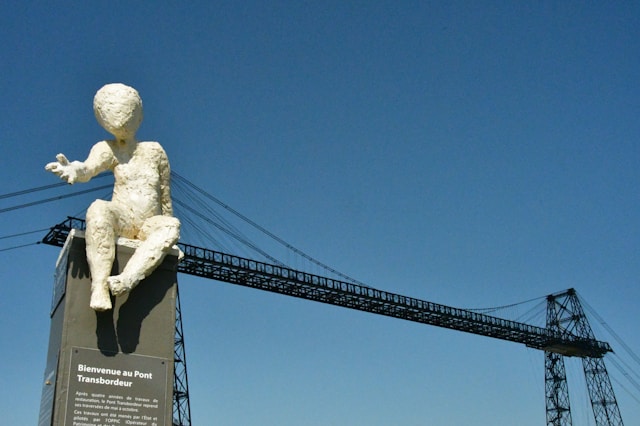
Thanks to the efforts of heritage conservationists, the bridge has been listed as a historic monument in 1976. Restoration work was carried out between 1980 and 1994, restoring it to its original state.
In 2016, a new restoration campaign was launched. The bridge was dismantled, piece by piece, for a complete overhaul. The work will be completed in 2020, restoring the transporter bridge to its former glory, while modernising it to welcome the public in optimum safety conditions.
The transporter bridge today: a must-see tourist attraction
Crossings and guided tours
Since its reopening, the Rochefort transporter bridge has become a major tourist attraction. Crossings are possible from 29 March to 2 November 2025. The gondola makes a return trip every 10 to 15 minutes, subject to weather conditions.
Guided tours are available to discover the history of the bridge, its mechanical operation and anecdotes linked to its construction.
The Maison du Transbordeur
Located in Echillais, on the south bank of the Charente, the Maison du Transbordeur is an interpretation centre dedicated to the history of the bridge and other ferry bridges around the world. It features :
- A permanent exhibition on the construction of the Rochefort bridge.
- Temporary exhibitions on the history of ferry bridges.
- Models, photographs and archive videos.
Les Terrasses du Transbordeur
Inaugurated in 2024, this reception area in Rochefort offers :
- A ticket office and souvenir shop.
- A panoramic terrace with a direct view of the deck.
- A restaurant, «Roseaux et Bocaux», serving local cuisine based on fresh produce.
Practical information for visitors
Site access
- Rochefort address: rue Jacques Demy, 17300 Rochefort.
- Address on the Échillais side: rue de Martrou, 17620 Échillais.
- GPS coordinates available on official website.
Recommended means of transport
- By car: free car parks near both banks of the river.
- By bus: R'bus lines serving stops near the bridge.
- By bike: direct access via the Vélodyssée and Flow Vélo.
Rates and timetables
- Admission: €2.10 for adults, €1.50 for children.
- Timetable: crossings every 10 to 15 minutes, subject to technical and weather conditions.
Le Rochefort transporter bridge is much more than just a piece of engineering: it's a testament to France's industrial heritage and a technological feat that is still in operation today. When you visit Rochefort, don't miss the chance to admire this emblematic monument, cross the Charente on board the gondola and discover its fascinating history through the Maison du Transbordeur.