



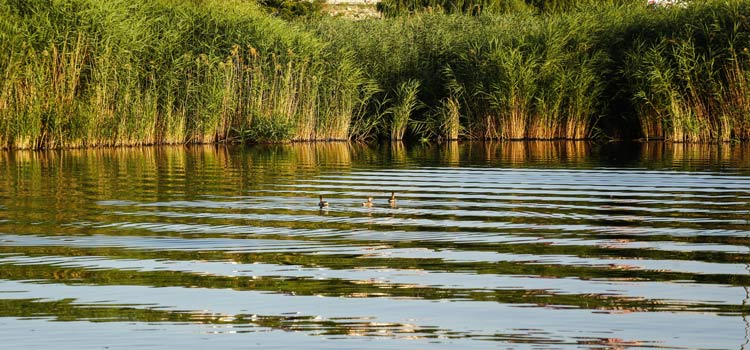
Le Brouage marshes, located in Charente-Maritime, is a remarkable natural area between land and sea, in the heart of the former salt marshes. This protected area, shaped by man over the centuries, is now home to exceptional biodiversity and bears witness to the region's economic and environmental history. An ideal destination for nature lovers and ramblers, the Brouage marshes offers a unique experience between wild landscapes and historical heritage, during your stay at our campsite in Saint-Georges de Didonne.
The history of the Brouage marshes
Le Brouage marshes has its origins in the Middle Ages, when this region of Charente-Maritime was dedicated to the exploitation of salt marshes. From the 13th century onwards, the salt produced in these marshes was a key element in the local economy, used not only to preserve foodstuffs, but also as an important currency. Visit port of Brouage, Brouage, founded in 1555, quickly became a strategic trading centre, particularly for the export of salt throughout Europe. At the time, Brouage was a flourishing place, bustling with maritime activity.
However, in the 19th century, with the decline of the salt trade and the gradual silting up of the port, the marshes were gradually abandoned. Over the years, these former salt marshes were transformed into natural wetlands, giving this area a new ecological role. Today, the Brouage marshes is protected as a sensitive natural area, preserving both its history and its exceptional biodiversity.
The flora and fauna of the Brouage marshes
Le Brouage marshes is a veritable sanctuary for biodiversity, home to a wealth of flora and fauna. As a wetland, it is an ideal habitat for many animal species, particularly migratory birds. Every year, over 200 species of birds frequent the marsh, making it a popular destination for birdwatchers. Among the most emblematic species are the white stork, the grey heron and the white spoonbill, which come to nest and feed in this ecosystem.
The flora of the marsh is also varied, with plants adapted to saline soils, such as glasswort and sea lavender, populating the wet meadows. These plants, known as halophiles, play an essential role in the ecological balance of the marsh. In addition, the drier areas are home to meadows and reedbeds, forming a unique natural setting. This fragile ecosystem, where specific flora and fauna cohabit, is essential for regulating water and conserving local biodiversity.
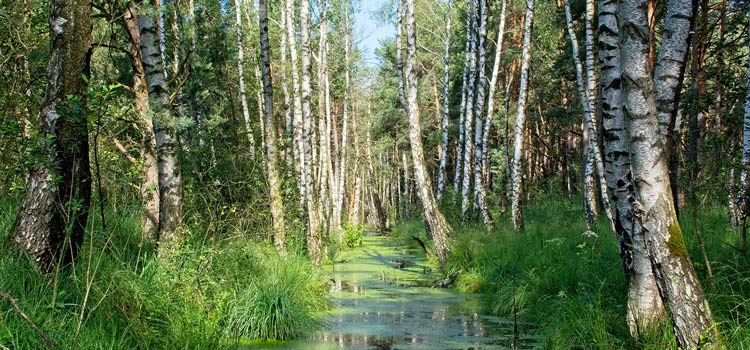
Discover the Brouage marshes on foot or by bike
Le Brouage marshes is ideal for exploring on foot or by bike, offering visitors a total immersion in nature. Several waymarked paths criss-cross the site, allowing you to explore the diversity of landscapes that make up the marsh. Whether for a leisurely stroll or a longer hike, these paths offer privileged access to the local flora and fauna, as well as magnificent views over the horizon, where nature stretches as far as the eye can see.
Birdwatchers will also find specially equipped observation points, ideal for admiring the many species of birds that inhabit the area. For cyclists, there are cycle paths The adapted paths allow you to cover longer distances while enjoying the exceptional natural setting. Walks through the marsh are suitable for all ages, making it the perfect place for families to relax, while respecting this fragile ecosystem.
Brouage's historical heritage
Le Brouage's historical heritage is closely linked to its past as a commercial and military port. Founded in the 16th century, Brouage was originally a flourishing centre for the salt trade, the «white gold» of the time. Thanks to its strategic position, the port of Brouage quickly grew in importance, attracting merchants and sailors from all over Europe. However, with the gradual silting up of its maritime accesses, the town had to reinvent itself.
Under the reign of Louis XIII, Brouage became a military stronghold, with powerful fortifications to protect the Atlantic coast. It was the famous military engineer Vauban who designed its imposing walls, bastions and fortified gates, which can still be seen today. The citadel at Brouage, a listed historic monument, is a remarkable example of military architecture.
Brouage's heritage is not limited to its ramparts: a stroll through the town reveals the remains of the port, salt warehouses and religious buildings that bear witness to the town's rich past. To visit Brouage is to immerse yourself in the fascinating history of a town that has combined trade and defence over the centuries.
Practical information for visiting the Brouage marshes
Le Brouage marshes is accessible all year round, giving visitors the opportunity to discover this remarkable natural area at different times of the year. Access to the site is free, allowing visitors to explore at their own pace, whether for a stroll or wildlife observation. Guided tours are also available, by prior arrangement, for those wishing to learn more about the history and biodiversity of the marsh.
Located in Charente-Maritime, near the citadel of Brouage and not far from our campsite near Royan, The marsh is easily accessible by car, with free parking available near the entrance. For cyclists, there are cycle paths that provide access to the site while enjoying the surrounding countryside. The signposted paths are suitable for everyone, whether you're a walker or a cyclist.
To make the most of your visit, we recommend that you bring binoculars to observe the many species of birds found in the marsh. Information panels line the paths, guiding you along the way and providing details of the fauna, flora and history of the site.
Le Brouage marshes is a unique place in Charente-Maritime, a blend of nature and history. With its wild landscapes, exceptional biodiversity and historical heritage, this site offers an enriching experience for all visitors. Whether you're a keen walker, an avid birdwatcher or curious about the history of the salt trade, the Brouage marshes will win you over with their natural and cultural riches.